
Should They Stay or Should They Go? Why Fairness Matters in Talent Management
In today’s labour market, where employees openly share their workplace experiences and expectations, perceptions of fairness are a strategic necessity.

Research and Innovation blog
Category
In today’s labour market, where employees openly share their workplace experiences and expectations, perceptions of fairness are a strategic necessity.

Over the past decade, metamaterials research at the University of Exeter has grown from a small, emerging area into a nationally recognised centre of activity, with strong industry partnerships and an increasingly visible role in UK strategy.

We’re excited to announce that nominations for the 2026 Knowledge Exchange Awards are officially open! If you’re part of a project that has turned research expertise into real-world benefit, now is your chance to put it forward and be recognised.

How do we make sense of elections in a rapidly changing political landscape? And what can moments like Brexit, the Scottish independence referendum, and the rise of nationalist parties tell us about Britain today?

How do we experience history as we walk through a city? How can digital tools bring lost places back to life?

Tim Taylor, an Associate Professor of Environmental and Public Health Economics, is based in the European Centre for Environment and Human Health at Penryn Campus.

When researchers develop promising concepts, translating those ideas into real-world products is often the biggest challenge. That’s where collaboration with skilled external partners can make all the difference.

The University of Exeter is proud to be a long-standing partner of the National Trust. As featured in the Trust’s Annual Research Report 2024–2025, our collaboration delivers practical, interdisciplinary solutions to some of the UK’s most pressing environmental, social and cultural challenges.

A flagship event to help Devon businesses harness the potential of Artificial Intelligence (AI) has been announced by The University of Exeter.

Torin, a leading UK manufacturer of fans, motors, and motorised impellers for air conditioning systems, partnered with the University of Exeter through a Knowledge Transfer Partnership (KTP) to advance its product design capabilities.

The University of Exeter has joined the University-Industry Demonstration Partnership (UIDP), a global initiative aimed at enhancing collaboration between academia and industry.

Fast fashion and fast technology have a significant impact on the world's environment. But, by introducing slow food and small-scale mining we can cultivate a positive impact.

The South West of the UK, especially the Celtic Sea, plays a vital role in the nation's offshore wind capabilities.

After years researching the beneficial biochemical effects of watercress in reducing human skin irritation ( initially funded by the Torbay Medical Research Fund), in 2019, Professor Paul Winyard and Dr Kyle Stewart co-founded a spin-out company, Watercress Research Limited, with a view to commercialising a...

Despite covering most of our planet’s surface and playing a pivotal role in the climate system, the ocean hardly features on the UK schools’ curricula and is rarely taught in primary schools.

August 5th sees the launch of our Images of Research Competition for 2024. The annual competition, run by the Researcher Developer and Research Culture, team enables Early Career Researchers to practice key skills in communicating their research to a non-specialist audience.

Licensing can be a tricky field to navigate. We spoke to Dr Mark Carew to explore his licensing journey with his card game, What the Pharma?Game.

Dr William Hawkes surveyed the insects in the Pyrenan mountain pass to catalogue the number of specimens & reflect on what they mean for the environment.

Section 28 and its afterlives in the South West is a project co-led by Dr Helen Birkett, Dr Chris Sandal-Wilson, and Dr Hannah Young, with support from the National Lottery Heritage Fund.

Are you a business thinking about collaborating with us? Are you unsure what the University of Exeter can offer you?
Dr Grace Twiston-Davies, a former Post-Doc Research Fellow, is now the Co-Director and Co-Founder of Wildflower Collective. This non-profit organisation is dedicated to tackling the climate and environmental crisis through the strategic use of wildflowers.
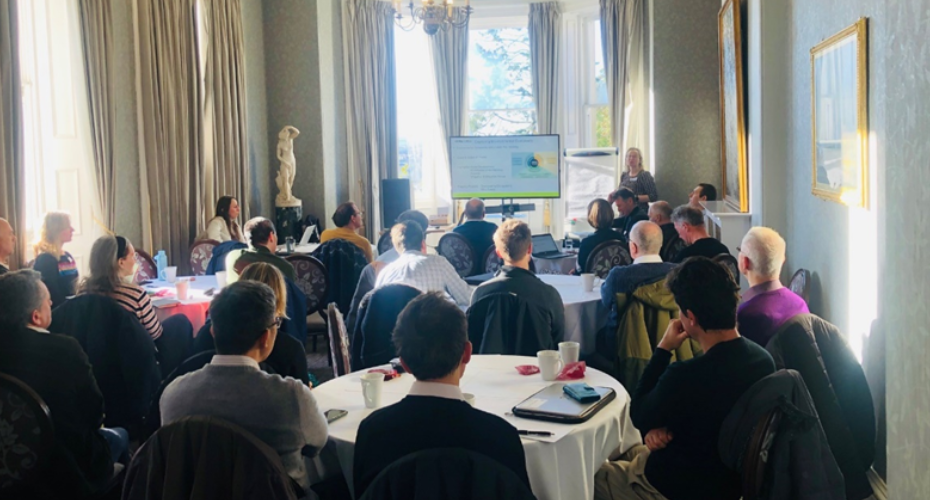
Exeter Innovation hosted a hybrid seminar and workshop ‘Introducing the Met Office Academic Partnership’ attended by over 60 delegates in person and online at the University on January 8.

Diabetes PhD student James Russ-Silsby discusses the groundbreaking research taking place at the University of Exeter – including the studies into neonatal diabetes.

Dr Dario Sansone, Lecturer in Economics in the Business School, is conducting quantitative analysis to measure attitudes towards LGBTQ+ individuals, to document socio-economic and health disparities by sexual orientation and gender identity, and to estimate the economic impact of LGBTQ+ policies.

Do you dream of turning your start-up into a thriving, scalable business that captures the market's attention? The SETsquared Exeter Business Accelerator Programme is designed to transform your tech start-up concept into an investible venture.

Er, nope ... wrong!

The University of Exeter has signalled its commitment to supporting female entrepreneurial activity by becoming the first university and 200th organisation to sign the Investing in Women Code.
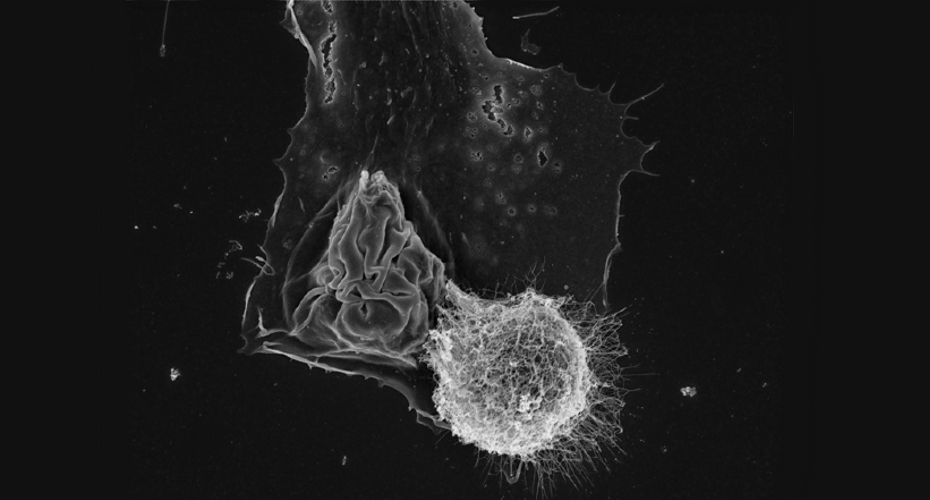
Guest post by Professor Elaine Bignell, an expert in fungal lung infections at the University of Exeter’s MRC Centre for Medical Mycology – the largest centre of its kind in the world.

In honour of International Women's Day 2023, we're celebrating women who excel in the field of knowledge exchange at the University of Exeter.

A team of world leaders in molecular and cellular biology have pioneered new anti-ageing technology through the University of Exeter spin-out company, SENISCA.

Three "super-leverage points" could trigger a cascade of decarbonisation in sectors covering 70% of global greenhouse gas emissions, according to a new report presented at the World Economic Forum in Davos.

On Friday 13th January 2023, the Centre for Resilience in Environment, Water and Waste (CREWW) team were honoured to host the Rt Hon Mr Ben Bradshaw (Labour MP for Exeter) and Steve Race (future Labour candidate).

‘Life-changing’ research collaborations were celebrated on Thursday 20 October at the University of Exeter’s inaugural Knowledge Exchange Awards.

Innovation, Impact and Business’s Commercialisation Team, together with SETsquared Exeter and Student Startups, have created The Exeter Entrepreneur, a new 'one-stop-shop' handbook offering tools and guidance to students, researchers, staff, and businesses interested and involved in entrepreneurship.

A collaborative partnership between researchers at the University of Exeter and the largest listed UK water business has led to the development of the ‘Event Recognition in the Water Network’ (ERWAN) system.

Researchers from the Renewable Energy group are developing novel materials for windows which allow light through whilst protecting it against the heat from the sun.

Dr Caitlin Kight is part of the University's Academic Development and Skills team and is using her EdD study to inform how to develop and enhance the use of 'self-study'.

‘European university partnerships more important now than ever’ is written by Sally Faulkner, Exeter’s Assistant Deputy Vice Chancellor (Europe).

Utilising funding from Research England Policy Support Fund, Professor Pascale Aebischer and Professor Victoria Tischler set out to bring research regarding the pandemic to a wider audience and impact policy at a government level.

Psychology PhD student Katy Chapman is taking a break from lab work to investigate pollinators in the South Devon AONB, as part of her work looking at pollinators.

Having recently completed her bioscience PhD, Dr Rebekah Boreham has transitioned into biomedical research to apply skills learned in her PhD studies to the field of diabetes.

Research by PhD candidate Anna Seecharan is investigating how our sense of smell and cooking and eating communally influences our relationship with food.

The Exeter Research Networks was launched on 31st May bringing together research from across the University.

Drama PhD candidate Faye Rigopoulou is utilising her background in musical theatre to investigate and tackle the stereotypes surrounding ageing female actors in musical theatre.

The University of Exeter is delighted to welcome a new Royal Society Entrepreneur in Residence, Susannah McClintock. During her time with us, Susannah will be working on a new Green Futures Accelerator at the University and will champion diversity in entrepreneurship.

AHRC funded History PhD student Shreya Gupta's research is collaborating with Oxford's Ashmolean Museum to study the history of coins brought together by Indian collectors.

The University of Exeter is a proud sponsor of the South West Tech Analysis Report 2022. Drawing together data and insight from the tech sector, the report reveals challenges, opportunities, and key developments across the ecosystem.

Research by Computer Science PhD student James Sakal is tackling the puzzle of university course timetabling – including finding effective ways to allocate rooms and eliminate clashes for students.

Policy@Exeter are launching their ambitious 2022 training programme for researchers at the University of Exeter who want to use their research to inform decision-making and create impact.

To mark International Women's Day – this Three Questions blog by Geography PhD student Hannah Hayes – reflects on the need for promoting women in academia.

Postgraduate research student Ash Wilson – based in University of Exeter's Renewable Energy Department – talks about her passion for developing renewable energy solutions for the Ministry of Defence.

A landmark translational research project, led by Professor Andrew Crosby and Dr Emma Baple from the University of Exeter, has defined more than 150 different genetic disorders in North American Anabaptist (Amish/Mennonite) communities, 25 of which are new to medical science.

A recent Knowledge Transfer Partnership between the University of Exeter and South West Water has developed a landmark AI tool to improve the efficiency of sewage systems.

PhD student William Rees discusses how he became interested in researching the 1970s and 1980s American dance culture, the area of disco's history he would like to investigate next and the best and worst things about his field of research.

Research at the University of Exeter is helping to protect and strengthen biodiversity in the Amazon rainforest through facilitating and incentivising sustainable land use.

New evidence predicts that more than one in three people worldwide will still mainly be using polluting cooking fuels and technologies in 2030, despite being a significant source of disease and environmental destruction.

Exeter College student Tess Walsh talks more about The World Turned Upside Down – a play inspired by research by the IDEAL project which aims to improve ways of living well with dementia.

Exeter College student Tess Walsh discusses The Turned Upside Down – a play which has evolved from research by the IDEAL project.

In the latest Europe Blog, Professor Sally Faulkner, Exeter’s Assistant Deputy Vice Chancellor (Europe) talks about how our European strategy aligns to the University’s new ten year strategy and progress on partnerships, research and education.

The University of Exeter’s diabetes research has led to the creation of an education programme which has helped to increased referrals for genetic testing and diagnoses of ‘monogenic’ diabetes.

Policy@Exeter are a dynamic community, working to improve and increase engagement with policy within the University and further afield.

Postdoctoral researcher Dr Richard Vytniorgu is a member of the Wellcome Centre – cultures + environments of health exploring the subject of loneliness and belonging in the LGBTQIA+ community.

The Entrepreneurial Researcher Programme or “ERP” is designed to support researchers generate impact by commercialisation in all forms.

Research evidence from the ‘Mapping Paths to Family Justice’ study (Mapping) led by Professor Anne Barlow at the University of Exeter has helped to reshape family mediation policy and practice and improve user experience for separating couples, after radical legal aid changes.

How do artists without mental imagery create unique and imaginary pieces of art? Read how visual artists with aphantasia create their work.

"European languages and partnerships remain critical for global Exeter and Britain" is written by Sally Faulkner, Exeter’s Assistant Deputy Vice Chancellor (Europe).

Research by the University of Exeter has identified the causes of more than 20 genetic subtypes of diabetes, leading to improved treatment and better quality of life.

A University of Exeter research group has helped to eliminate tonnes of plastic waste entering the sea, improving the health of organisms and the environment.

Researchers at the University of Exeter have developed tools which can help clinicians classify what type of diabetes a patient has to ensure they get the best treatment possible and reduce any complications.

Professor Ruth Sealy has led reviews into the diversity of leadership groups of large public and private organisations across the UK.

On this year's World Water Day, Centre for Water Systems postgraduate researcher Elizabeth Lawson looks at the social, cultural and economic value of water during the Covid-19 pandemic.
Water engineering experts at the University of Exeter have helped achieve significant savings for water companies and increased affordability and high levels of service to UK water customers.

The history of women and feminism in Spain, erased and hidden during the Franco era, has been rediscovered thanks to researchers at the University of Exeter.

The environmental impact of our consumer products has become an increasingly important factor in our buying decisions but how do you balance researching companies’ ecological footprint with the protection of confidential data?

Since the start of the collaboration in 2018, the Data Science team at Exeter and City Science have worked together on 9 projects, leveraging over £2 million of government funding and covering subjects around transport and energy optimisation, digital twin calibration, creation of open urban...

Utilising the power of the latest developments in technology, researchers at the University of Exeter have developed an app to enhance the visiting experience for tourists around several cities.

Dr Oleksandr Kyriienko, lead of the University of Exeter’s Quantum Dynamics, Optics, and Simulation group (QuDOS) is working in close partnership with Dutch start-up Qu & Co to develop quantum software with the potential to transform the way we use the huge power of quantum...

Professor Joe Kember has helped to deliver the world’s largest open access database of Magic Lantern slides. Lantern slides originated in 17th century devices which came to be known as “magic lanterns.”

Research at the University of Exeter has analysed competition and trade in food and agricultural markets and developed a framework to forecast retail food prices in the UK.

For many years, scientific research has been hidden behind expensive paywalls, leaving access to new and exciting scientific research inaccessible to the general public.

The COVID-19 crisis is impacting our mental health. Increased uncertainty, health fears, disruption to normal life, isolation, unemployment, and the loss of loved ones increase worry, anxiety and depression.

University of Exeter research has the protection of marine biodiversity across the world. Researchers at the University of Exeter, along with international collaborators, explored the status, distribution and behaviour of marine vertebrate species which were of commercial or conservational importance.

‘Life after Brexit’ is written by Sally Faulkner, Exeter’s Assistant Deputy Vice Chancellor (Europe). Brexit.

Research led by Dr Ana Beduschi from the University of Exeter Law School, has informed policymakers of the risks that digital health passports could pose to human rights, data privacy and social equality.

The research team of Identity, Inequality and the Media in Brexit-Covid19 Britain reflect on the impact Brexit and the Covid-19 pandemic are having on inequalities in Britain.

Scientists at the MRC Centre for Medical Mycology made a discovery that could help in the fight against a fungus that kills around 200,000 people every year and causes lung and allergic diseases in millions of others.

Using the expertise gained through their partnership with the University of Exeter, Applegate decided to set up the Covid-19 PPE Supply Hub, to link PPE customers with PPE suppliers throughout lockdown.

The University of Exeter has identified a direct link between traumatic brain injury (TBI) and impulsivity and problems in social reasoning, which are risk factors for young people committing violent and repeated crime.

Metamaterials PhD student Hannah Barnard is working on a project which could improve our ability to detect and image very small particles – such as a single molecule – using light beams.

Researchers at the MRC Centre for Medical Mycology discover that faulty signalling in the immune system of healthy individuals leads to Chromoblastomycosis.

Professor Toby Pennington and Dr Carolyn Petersen are working with field partners at the Instituto Ouro Verde (IOV) to level the playing field in gender roles in agroforestry systems in Brazil.

Professor Mike Allen and the PhycoMExUK team are using innovative technologies and hydrothermal processes to turn seaweed biomass into sustainable fertilisers and biofuels.

Research conducted by Dr Anne Leonard and Professor Will Gaze at the University of Exeter has shaped the global understanding of antimicrobial resistance (AMR), and has influenced government and WHO strategies in tackling one of the world’s biggest environmental threats.

Research at the University of Exeter has influenced and accelerated the introduction of opposite-sex civil partnerships and reopened debates about the ‘common law marriage myth’ and a related need for wider cohabitation law reform.

Anthrozoology PhD student Michelle Szydlowski discusses how working in Nepal has informed both her PhD thesis and her research.

The University of Exeter works closely with the Met Office to tackle key challenges in weather and climate prediction as part of an in-depth Met Office Academic Partnership.

The University of Exeter has helped to change the way that educators approach teaching grammar and writing to children.

Geography PhD student Emily Judson is researching the governance challenges emerging from the digitalisation of the energy industry and the development of policy which aligns with the transition to a Net Zero energy system.

Professor Andy Jones and team have generated a substantial evidence base over the past 12 years for beneficial effects of nitrate-rich dietary supplements on sport and exercise performance as well as cardiovascular and metabolic function.

Research at the University of Exeter helped avoid closure of UK airspace on two separate occasions in 2017 and 2019.
Choose which optional services may run. Necessary cookies used to make the website work are not affected.
Allows analytics tools to measure how the website is used.
Allows content from third-party services such as YouTube to load.